Product Listing and Optimization

Module 4: Product Listing and Optimization
4.1 Creating Compelling Product Descriptions
4.2 High-Quality Product Images and Videos
4.3 Search Engine Optimization (SEO) for Dropshipping
In Module 4, we will explore the essential aspects of product listing and optimization for your dropshipping store. This involves creating compelling product descriptions that highlight the benefits of your products, using high-quality images and videos to enhance the visual appeal, and implementing effective SEO strategies to improve your store's visibility in search engine results. These optimization techniques are vital for attracting potential customers, increasing engagement, and ultimately driving sales. By focusing on product listing and optimization, you can create a more appealing and successful dropshipping business.
Creating Compelling Product Descriptions:
Creating compelling product descriptions is essential for attracting potential customers, building trust, and encouraging sales. A well-crafted product description communicates the value and benefits of the product, addresses customer concerns, and convinces them to make a purchase. Here are some tips to help you create compelling product descriptions:
1. Know Your Target Audience:
Understand your target customers and tailor the product description to resonate with their needs, preferences, and pain points.
2. Highlight Key Benefits:
Clearly state the main benefits of the product and how it can solve a problem or improve the customer's life. Focus on what sets your product apart from others.
3. Use Persuasive Language:
Use descriptive and persuasive language to evoke emotions and create a sense of urgency. Use words that convey excitement, value, and exclusivity.
4. Keep it Clear and Concise:
Avoid lengthy paragraphs and use bullet points to present key features and benefits in a scannable format. Make it easy for customers to quickly grasp the product's value.
5. Use High-Quality Images:
Supplement the description with high-quality product images that showcase the item from different angles and highlight its features.
6. Provide Technical Details:
Include relevant technical specifications and dimensions, especially for products where these details are important (e.g., electronics, clothing sizes).
7. Tell a Story:
Share a compelling story or anecdote related to the product, which can create an emotional connection with customers and make the product more memorable.
8. Address Customer Concerns:
Anticipate common questions or concerns customers may have about the product and address them in the description. This can help build trust and alleviate doubts.
9. Use Social Proof:
Incorporate customer reviews and testimonials to provide social proof of the product's quality and effectiveness.
10. Add Call-to-Action (CTA):
Encourage customers to take action by including a clear and compelling call-to-action, such as "Buy Now," "Add to Cart," or "Limited Stock, Order Today."
11. SEO Optimization:
Incorporate relevant keywords in the product description to improve search engine visibility and attract organic traffic to your product pages.
High-Quality Product Images and Videos:
In dropshipping, customers can't physically see or touch the products, so high-quality images and videos become even more critical. Here's how to optimize your visuals:
-
Use high-resolution images: Ensure that product images are of excellent quality, allowing customers to zoom in and see the details clearly.
-
Show multiple angles: Include images that showcase the product from different angles to give customers a comprehensive view.
-
Use lifestyle images: In addition to standard product images, include lifestyle images that demonstrate the product in use. This helps customers envision how the product fits into their lives.
-
Incorporate videos: Product videos are engaging and can provide additional information about the product. Consider creating short demo videos or tutorials.
-
Optimize image and video sizes: Compress image and video files without compromising quality to improve website loading speed.
-
Add alt text and descriptions: Provide descriptive alt text for images to improve accessibility and assist search engines in understanding the content.
Search Engine Optimization (SEO) for Dropshipping:
Search Engine Optimization (SEO) for your dropshipping store and how you can optimize your website to improve its visibility in search engine results. SEO is crucial for attracting organic traffic and potential customers to your online store.
Keyword Research:
Conduct thorough keyword research to identify relevant and high-traffic keywords related to your products and niche. Use tools like Google Keyword Planner or other SEO software to find keywords with reasonable search volume and low competition.
Optimize Product Titles:
Incorporate your target keywords naturally into the product titles without overstuffing. Make sure the titles are descriptive, engaging, and accurately represent the product.
Meta Tags and Descriptions:
Write compelling meta tags and meta descriptions for each product page. These snippets appear in search engine results and can significantly impact click-through rates. Include relevant keywords and a clear call-to-action.
URL Structure:
Ensure your product URLs are clean and include relevant keywords. Short, descriptive URLs are more user-friendly and can improve SEO.
Image Optimization:
Optimize product images by using descriptive file names and adding alt tags. Alt tags not only help search engines understand what the image is about but also improve accessibility for visually impaired users.
Mobile Responsiveness:
Ensure your dropshipping store is mobile-friendly and responsive. Google prioritizes mobile-friendly websites in search results since a significant portion of online traffic comes from mobile devices.
Site Speed:
Improve your website's loading speed by compressing images, using caching, and optimizing code. Site speed is an important ranking factor and contributes to a positive user experience.
High-Quality Content:
Create informative and valuable content related to your products and industry. This can include blog posts, guides, tutorials, and product reviews. High-quality content attracts backlinks and enhances your store's authority in search engines.
Internal Linking:
Implement a smart internal linking strategy to guide both users and search engines through your website. Internal links help search engines discover and index your content more effectively.
Customer Reviews and Ratings:
Encourage customer reviews and ratings for your products. Positive reviews not only influence potential customers but also contribute to the overall trustworthiness of your website.
Secure Website:
Ensure your dropshipping store is secure with HTTPS. Secure websites are favored by search engines and provide a safer shopping experience for customers.
Social Media Integration:
Integrate social media sharing buttons and encourage customers to share your products on social platforms. Social signals may indirectly impact SEO.
Local SEO:
If you have a physical location or target local customers, optimize your store for local SEO. Register with Google My Business and include location-specific information on your website.
Regular Updates:
Keep your dropshipping store up-to-date with fresh content, new products, and regular maintenance. Search engines favor active and relevant websites.
Monitor and Analyze:
Use tools like Google Analytics and Search Console to monitor your website's performance and identify areas for improvement. Analyzing data helps you make informed decisions to enhance your SEO strategy.
Remember that SEO is an ongoing process, and it takes time to see significant results. Consistent efforts to optimize your dropshipping store for search engines will eventually pay off with increased organic traffic, better rankings, and improved visibility to potential customers.

Module 1: completed

Module 2: Niche Selection and Market Research

Module 3: Setting Up Your Dropshipping Store

Module 4: Finding Reliable Suppliers

Module 5: Payment Gateways and Secure Transactions
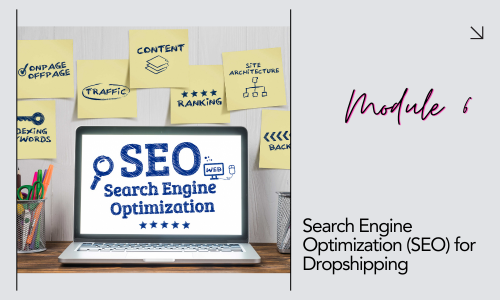
Module 6: Search Engine Optimization (SEO) for Dropshipping

Module 7: Social Media Marketing and Advertising

Module 8: Analytics and Performance Tracking

Module 9 : Order Fulfillment and Customer Service