How Snazzyway Scaled India’s Fashion Reseller Ecosystem Over 12 Years (2014–2026)
· Case Study · 10 min read
What began as a four-person reseller operation in 2014 has evolved into a structured fashion ecosystem shipping 1.5 lakh parcels every month — not through trend chasing, but through disciplined infrastructure building.
In 2014, Indian ecommerce was expanding rapidly — but backend systems were inconsistent. Women’s fashion demand was rising across marketplaces and social platforms, yet most reseller operations faced recurring operational friction: inventory uncertainty, inconsistent quality, unreliable dispatch timelines, and high return rates.
Snazzyway entered that environment with a clear premise: fashion reselling could not scale sustainably without backend discipline. A catalog alone was not enough. Price advantage was not enough. Operational systems had to come first.
This case study outlines how that infrastructure was built over twelve years — and why structured backend design remains the defining competitive advantage in India’s fashion ecommerce landscape.
The Structural Gap in Early Fashion Reselling
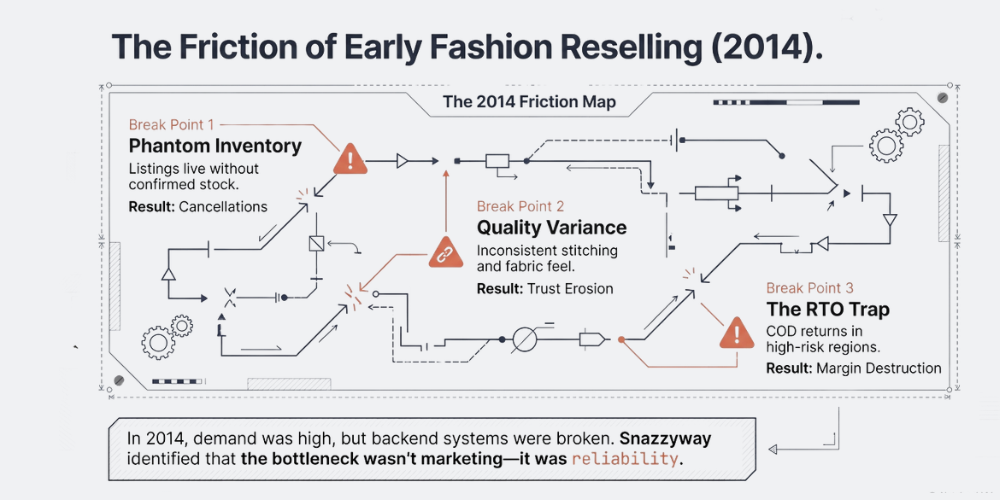
Before organized reseller platforms emerged, many fashion sellers depended on informal supplier networks. The consequences were predictable:
-
Inventory listings without confirmed stock
-
Order cancellations after customer payment
-
Inconsistent sizing and stitching standards
-
Dispatch delays and packaging variability
-
High return-to-origin (RTO) rates in COD-heavy regions
These were not isolated incidents — they reflected systemic backend weaknesses.
Snazzyway’s founding team recognized that seller success was directly tied to supplier reliability. Without synchronized inventory, verified quality control, and disciplined fulfillment processes, reseller growth would always remain fragile.
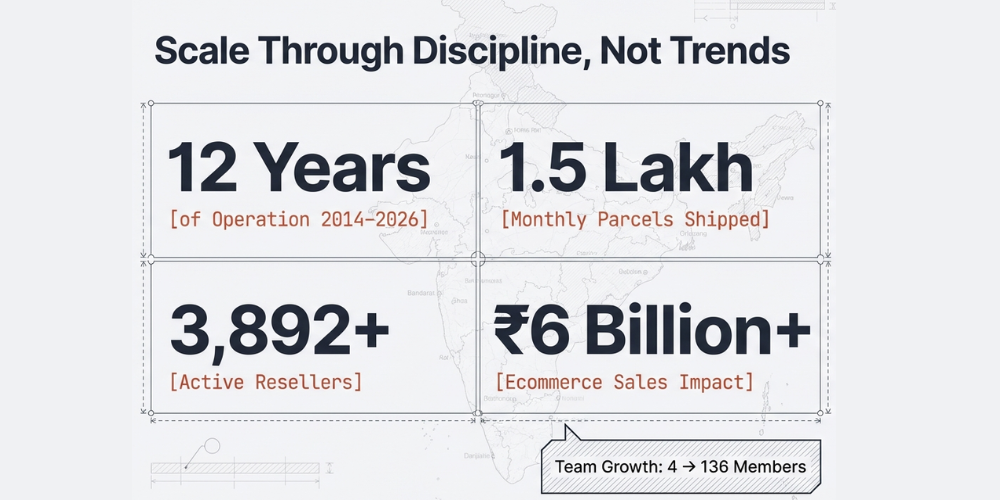
By the Numbers: Operational Scale Over 12 Years
2014 — Year Founded
3,892+ — Active Resellers
1.5 Lakh — Parcels Shipped Monthly
136+ — Team Members
₹6 Billion+ — Ecommerce Sales Impact Across India
4 → 136 — Team Growth Across 12 Years
These are infrastructure indicators, not promotional claims.
Each number reflects backend capacity:
-
Warehouse throughput supporting 1.5 lakh monthly parcels
-
Seller support operations sustaining 3,892+ active resellers
-
Process maturity built by a 136-member team
-
Ecommerce sales influence driven by consistent dispatch and quality discipline
Scale, in this context, is operational — not rhetorical.
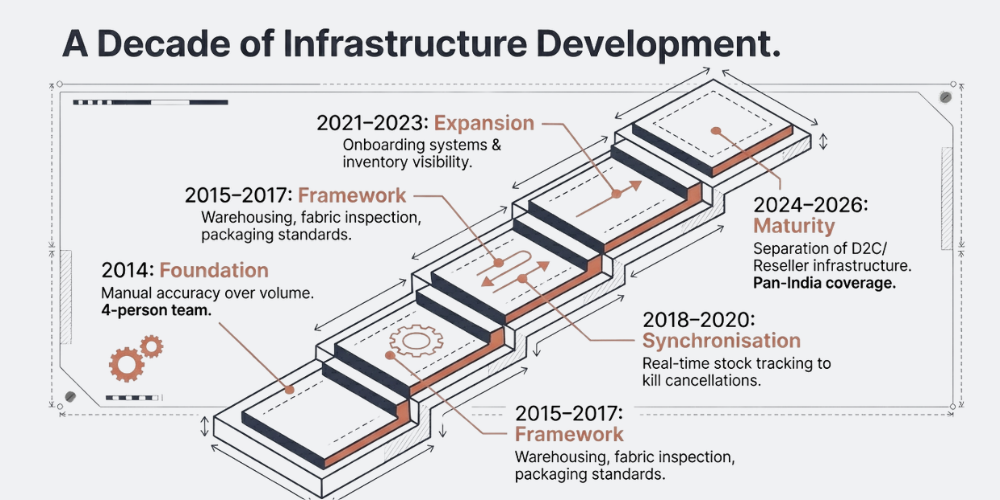
Infrastructure Development Timeline
2014 — Foundational Discipline
A four-person team established early inventory verification and manual dispatch coordination. Even at small scale, accuracy standards were prioritized over volume.
2015–2017 — Warehousing and Quality Framework
Dedicated warehousing was introduced. Structured quality checks were layered into operations, including:
-
Fabric inspection
-
Stitch consistency review
-
Measurement verification
-
Packaging standardization
Backend control replaced informal coordination.
2018–2020 — Inventory Synchronization Systems
Real-time stock tracking was deployed to reduce listing mismatches and order cancellations. Centralized warehouse coordination improved SKU-level visibility and seller reliability.
2021–2023 — Ecosystem Expansion
Structured onboarding systems were implemented to support a growing reseller base. Account coordination, inventory visibility tools, and process transparency improved seller stability.
2024–2026 — Platform Maturity
Operational separation between direct-to-consumer brand activity and reseller infrastructure was formalized. Full pan-India shipping coverage, 3,892+ active resellers, and 1.5 lakh monthly dispatches reflect backend maturity rather than short-term growth spikes.
Why Fashion Requires Brand-Backed Infrastructure
Fashion is among the most return-sensitive ecommerce categories. Fit expectations, fabric feel, and visual accuracy strongly influence post-delivery satisfaction.
Without real customer feedback loops, suppliers cannot refine product standards effectively.
Snazzyway’s direct-to-consumer operations function as a continuous quality intelligence channel. Return patterns, size mismatches, and product feedback directly inform backend adjustments before products enter the reseller ecosystem.
This feedback loop strengthens:
-
Measurement standardization
-
Fabric selection criteria
-
Visual accuracy in listings
-
Packaging durability
Brand-backed validation reduces downstream friction for resellers.
RTO Risk Management Through Data
Return-to-Origin (RTO) remains one of the largest operational cost drivers in Indian COD markets.
Common causes include:
-
Incomplete addresses
-
Impulse COD orders
-
Delivery refusals
-
Low prepaid adoption in certain regions
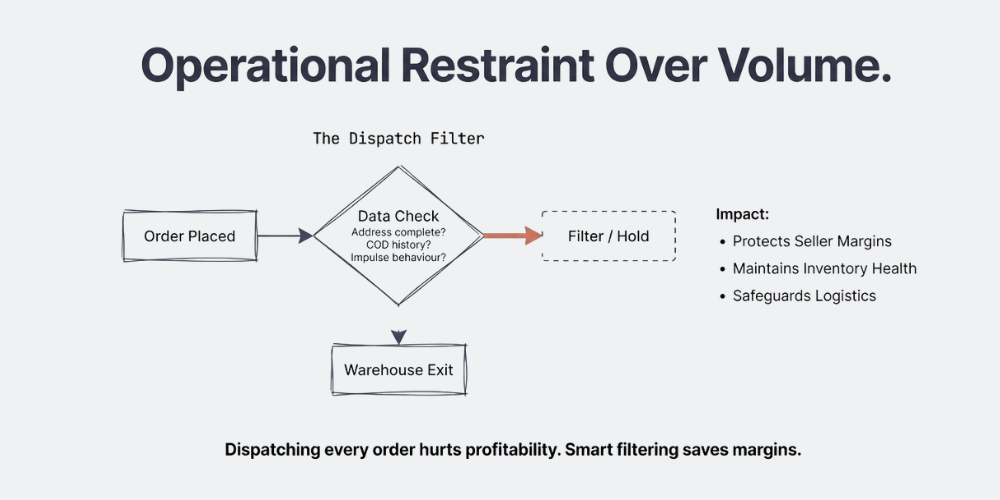
Snazzyway implemented structured order confirmation workflows and dispatch filtering systems to reduce preventable RTO exposure. Instead of dispatching every order automatically, data-driven checks identify high-risk shipments before warehouse exit.
This approach protects:
-
Seller margins
-
Inventory rotation health
-
Logistics relationships
-
Long-term ecosystem credibility
Operational restraint often proves more valuable than dispatch volume.
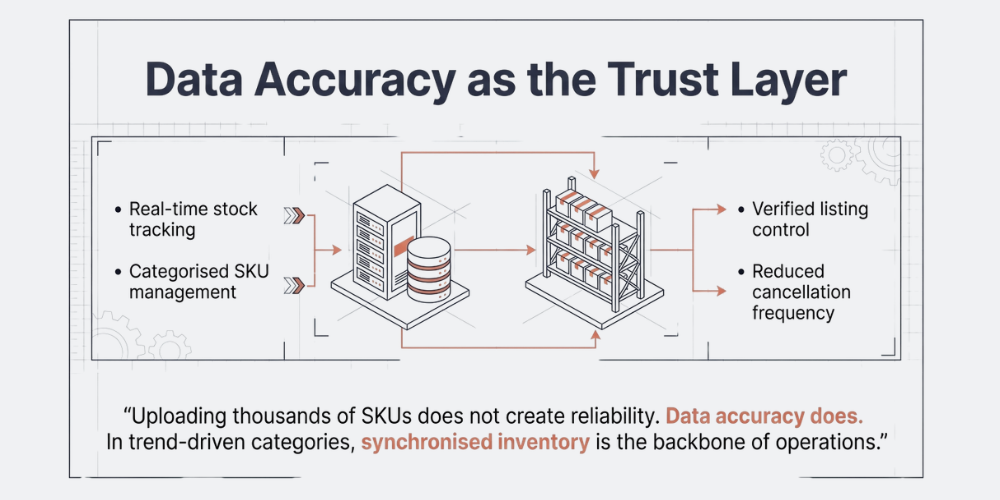
Inventory Synchronization as a Trust Layer
Inventory mismatch is one of the fastest ways to erode reseller confidence.
Snazzyway’s centralized stock coordination ensures:
-
Continuous availability updates
-
Verified listing control
-
Categorized SKU management
-
Reduced cancellation frequency
In fashion categories where trends shift quickly, synchronized inventory data becomes the backbone of scalable operations.
Uploading thousands of SKUs does not create reliability. Data accuracy does.
Multi-Layer Quality Control
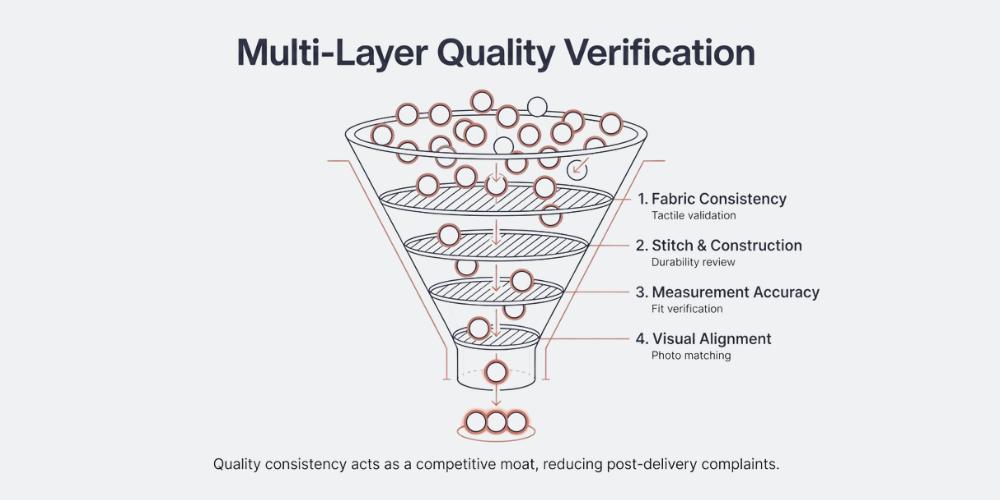
Each product passes structured verification before dispatch:
-
Fabric consistency validation
-
Stitch and construction review
-
Measurement accuracy confirmation
-
Visual alignment with product photography
Items that fail internal standards are filtered prior to shipment.
In women’s fashion especially, disciplined quality control reduces post-delivery complaints and strengthens reseller credibility with end customers.
Quality consistency becomes a competitive moat over time.
Enabling Structured Fashion Entrepreneurship
India’s ecommerce landscape includes thousands of independent sellers operating via social platforms, marketplaces, and standalone stores.
Many possess strong marketing capabilities and product intuition but lack backend infrastructure such as:
-
Warehousing capacity
-
Bulk procurement capital
-
Logistics partnerships
-
Quality inspection systems
-
Fulfillment teams
By centralizing these backend components, Snazzyway allows sellers to focus on branding, merchandising, and customer relationships rather than operational complexity.
This infrastructure-first model transforms fashion reselling from a fragile activity into a structured business pathway.
Strategic Separation: Brand and Infrastructure
As operations matured, Snazzyway formalized the distinction between:
-
Direct-to-consumer brand operations
-
Dedicated reseller infrastructure systems
The D2C channel generates live consumer intelligence.
The reseller infrastructure translates that intelligence into scalable backend support.
Separating these functions preserves brand integrity while optimizing seller-facing operations independently.
Clarity in structure strengthens both systems.
For customers who love Snazzyway products and want to turn that into a business — whether selling to friends, running an Instagram boutique, or building a full reselling operation — the reseller side of Snazzyway operates through a completely separate platform.
SnazzyWayDropshipping.com is built specifically for women and entrepreneurs who want to sell Snazzyway products without managing inventory, packaging, or shipping themselves. Everything ships directly to your customer under your brand.
If you've ever thought "I could sell this" while browsing our collection — that's exactly who it's built for.
The Future of Structured Fashion Reselling in India
India’s fashion ecommerce growth is driven by:
-
Smartphone penetration
-
Digital payment adoption
-
Social commerce expansion
-
Regional demand diversification
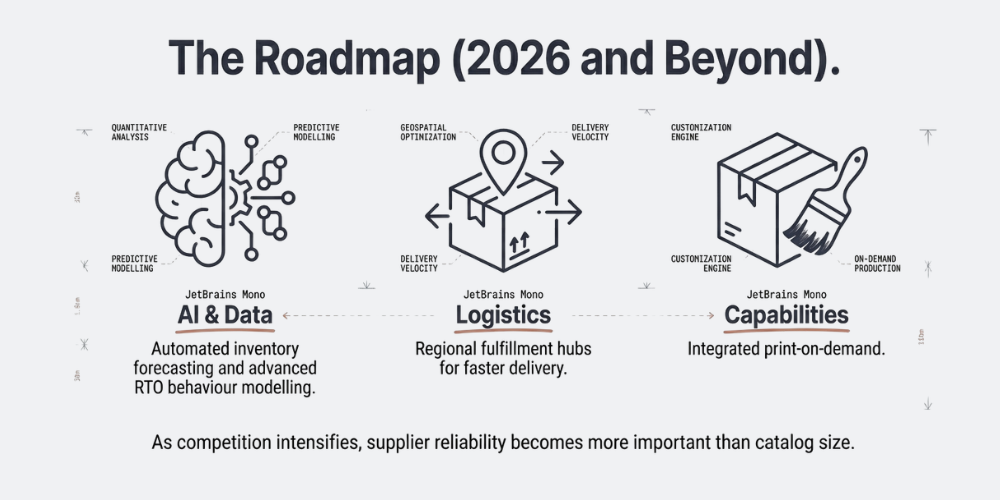
As competition intensifies, supplier reliability becomes more important than catalog size.
The next phase of reseller infrastructure will likely include:
-
Automated inventory forecasting
-
Advanced RTO behavior modeling
-
Regional fulfillment hubs
-
Integrated print-on-demand capabilities
-
AI-assisted demand analysis
Platforms that combine operational discipline with brand intelligence will define long-term market leadership.
Infrastructure Is the Strategy
Over twelve years, many businesses entered fashion reselling focused solely on product trends. Fewer invested in backend architecture.
Snazzyway’s evolution from a four-person team in 2014 to a 136-member organization shipping 1.5 lakh parcels monthly demonstrates a consistent principle:
In fashion ecommerce, infrastructure is not secondary. It is the core product.
Operational reliability, quality consistency, disciplined dispatch, and long-term seller relationships are not support functions — they are the strategic advantage.
In a market driven by short-term margins, infrastructure-focused platforms outlast trend-driven competitors.
You must login to post a comment.

FAQs
Find answers to the most common questions below.
Related Articles
You may also like these posts

What 10,000+ Reviews Taught Us in 12 Years
Aug 09, 2026
Why We Rebuilt the Snazzyway Review System
Aug 09, 2026
How Snazzyway Works — A Complete Guide for New Dropshipping Sellers in India
Mar 30, 2026

How Snazzyway Has Supported Indian Fashion Sellers for 12 Plus Years
Mar 30, 2026
How Indian Housewives Are Earning ₹30,000 a Month Selling Online From Home
Mar 30, 2026