How to Validate a Profitable Fashion Niche in India (2026 B2B Framework)
In India’s ecommerce market, niche selection is no longer about finding “low competition.”
It’s about finding structurally scalable demand.
Most online stores fail not because of poor ads — but because they choose categories that:
-
Have unstable margins
-
High return complexity
-
Weak repeat demand
-
Poor supplier compatibility
If you're building a serious ecommerce or dropshipping operation in 2026, niche validation must be data-backed, logistics-aware, and margin-driven.
This guide breaks down a practical B2B framework for evaluating fashion niches in India.
Why Niche Selection Is More Complex in India
India’s ecommerce ecosystem has unique variables:
-
COD-heavy purchasing behavior
-
High return rates in size-sensitive categories
-
Strong Tier 2 & Tier 3 growth
-
Price-sensitive yet trend-aware buyers
-
Festive season demand spikes
A niche that works internationally may fail locally if:
-
Return ratios exceed 30%
-
Fabric inconsistency leads to quality disputes
-
Shipping delays impact ratings
-
Supplier infrastructure cannot scale
In B2B ecommerce, niche validation must include operational feasibility — not just search volume.
The 2026 Fashion Niche Validation Framework
1️⃣ Demand Stability (Not Just Trend Spikes)
Instead of chasing viral trends, evaluate:
-
Is demand consistent year-round?
-
Does it spike only during one season?
-
Is it influenced by influencer cycles?
Example:
Women’s nightwear and innerwear categories show more stable monthly demand compared to occasion-specific apparel.
Stability allows better forecasting and supplier alignment.
2️⃣ Margin Simulation (Post-RTO Reality)
Before selecting a niche, simulate:
| Component | Typical India Range (Fashion 2026) |
|---|---|
| Product Cost | ₹350 – ₹900 |
| Shipping | ₹70 – ₹120 |
| RTO Buffer | 5% – 15% |
| Payment Gateway | 2% – 3% |
| Ad Cost Per Sale | ₹250 – ₹600 |
If effective net margin falls below 25% after returns, scaling becomes capital-intensive.
In operational analysis across Indian fashion categories, margin compression — not ad failure — is often the real scaling barrier.
3️⃣ Return Complexity (Critical in Apparel)
Not all fashion niches behave equally.
High return risk categories:
-
Tight size dependency
-
Poor size chart standardization
-
Fabric stretch inconsistency
Lower return risk niches:
-
Adjustable fits
-
Standard sizing
-
Non-size-sensitive accessories
Return management directly impacts working capital and supplier relationships.
4️⃣ Supplier Infrastructure Compatibility
A niche must align with backend capability.
Ask:
-
Can supplier refresh inventory frequently?
-
Is there structured packaging?
-
Are festive surge plans in place?
-
Is there dashboard-level visibility?
Fashion niches with faster trend cycles require supplier ecosystems that operate systematically — not manually.
Structured operational environments significantly reduce friction during scale phases.
Businesses evaluating niche opportunities often benefit from understanding how structured dropshipping infrastructure in India supports inventory visibility, RTO management, and scalable fulfillment models.
5️⃣ Platform Alignment (Shopify vs Amazon)
Some niches perform better on:
Shopify:
-
Branded fashion collections
-
Premium positioning
-
Custom packaging flexibility
Amazon:
-
Standardized SKUs
-
High-volume basics
-
Stable sizing categories
Niche choice must align with platform intent and compliance structure.
Common Mistakes in Niche Selection
-
Choosing based on keyword volume alone
-
Ignoring return simulation
-
Overestimating festive spikes
-
Not testing dispatch timelines
-
Selecting niche without supplier depth
In B2B ecommerce strategy, operational compatibility determines sustainability.
Strategic Insight for 2026
Fashion ecommerce in India is moving toward:
-
Data-backed niche validation
-
Margin-first decision models
-
Infrastructure-aligned supplier ecosystems
-
Backend transparency
Final Takeaway
In 2026, profitable niche selection in India is not about “low competition.”
It is about:
-
Demand consistency
-
Margin sustainability
-
Return-risk control
-
Supplier infrastructure alignment
-
Platform compatibility
Businesses that treat niche validation as a structural decision — not a marketing decision — scale more predictably.
Choosing a niche without evaluating supply-chain capability often results in ad dependency rather than business stability.

Related Articles
You may also like these posts
What 10,000+ Reviews Taught Us in 12 Years
Aug 09, 2026
Why We Rebuilt the Snazzyway Review System
Aug 09, 2026
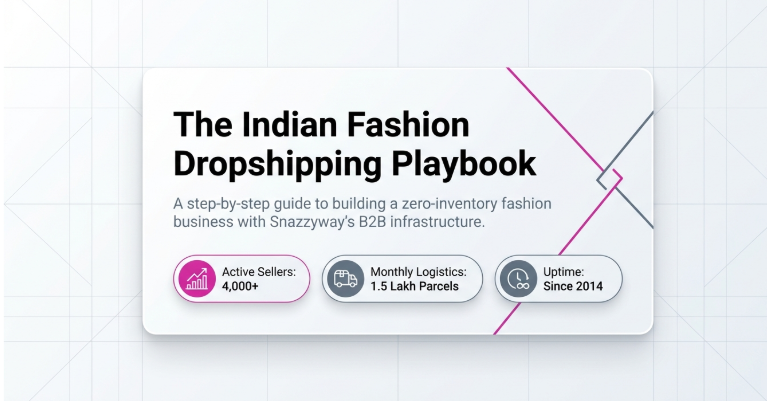
How Snazzyway Works — A Complete Guide for New Dropshipping Sellers in India
Mar 30, 2026
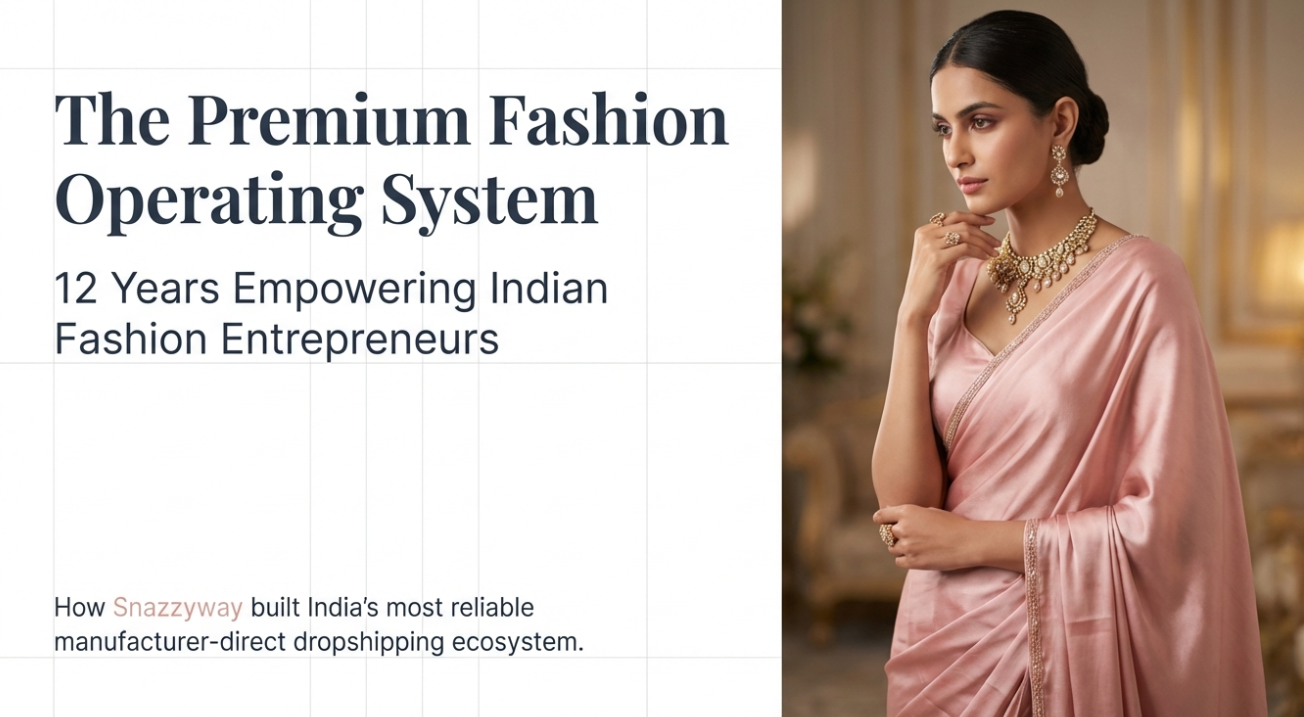
How Snazzyway Has Supported Indian Fashion Sellers for 12 Plus Years
Mar 30, 2026
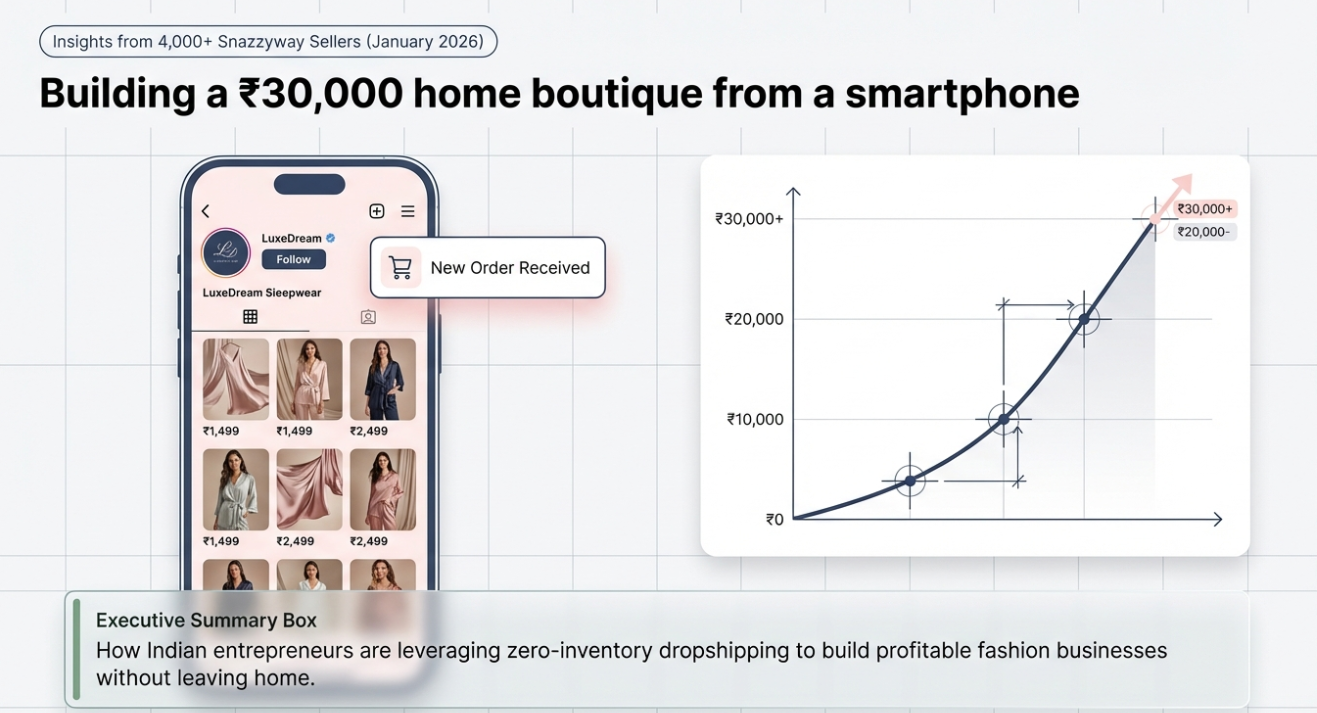
How Indian Housewives Are Earning ₹30,000 a Month Selling Online From Home
Mar 30, 2026