Why Lingerie Continues to Outperform in India’s Fashion Ecommerce (2026 Analysis)
In India’s rapidly evolving ecommerce market, not all fashion categories scale equally. While trends shift quickly in outerwear and occasion-based apparel, certain segments demonstrate consistent demand, stable margins, and repeat purchase behavior.
One such category is lingerie and innerwear.
Across Indian ecommerce platforms, lingerie continues to show:
-
Year-round purchase intent
-
Strong repeat buying cycles
-
High visual-led conversions
-
Manageable inventory depth compared to trend-based apparel
However, performance in this category depends heavily on operational structure. Factors such as size standardization, packaging discretion, dispatch reliability, and return control significantly impact long-term profitability.
For ecommerce operators and dropshipping businesses evaluating scalable niches in 2026, lingerie represents a category where demand stability meets backend alignment — provided supplier systems are structured to support volume growth.
This article breaks down why lingerie remains a high-performance fashion niche in India and what structural factors influence its scalability.
1️⃣ Demand Stability: A Year-Round Category
Unlike festive or occasion-specific apparel, lingerie is not seasonal in nature.
Purchases are driven by:
-
Personal use
-
Replacement cycles
-
Gifting
-
Lifestyle transitions
Search trends across Indian ecommerce consistently show stable baseline demand throughout the year, with moderate festive and sale-event spikes.
Stable demand reduces dependence on aggressive discounting strategies and unpredictable ad performance.
2️⃣ Repeat Purchase Behavior
Lingerie is not a one-time purchase category.
Consumers frequently repurchase due to:
-
Fit adjustments
-
Fabric wear over time
-
Desire for variety
-
Seasonal comfort needs
This creates stronger lifetime customer value (LTV) compared to many fast-fashion outerwear segments.
3️⃣ Margin Structure & Cost Simulation
Fashion margins in India vary significantly by category. Lingerie often offers a balanced structure between product cost and selling price.
Typical ecommerce cost structure (India 2026):
Higher repeat potential improves marketing efficiency and reduces customer acquisition pressure.
For businesses focused on long-term scalability, demand stability is often more important than trend spikes.
| Component | Approximate Range |
|---|---|
| Product Cost | ₹350 – ₹900 |
| Shipping | ₹70 – ₹120 |
| RTO Buffer | 5% – 15% |
| Payment Gateway | 2% – 3% |
| Average Ad Cost | ₹250 – ₹600 |
Profitability depends on maintaining net margins above 25% after RTO and ad costs.
In lingerie, margin predictability tends to be stronger than heavily trend-dependent categories where discounting erodes profit.
4️⃣ Return Complexity & Size Sensitivity
Apparel categories often suffer from high return ratios due to size mismatches and fit inconsistency.
In lingerie:
-
Standardized sizing systems reduce uncertainty
-
Clear size charts improve buyer confidence
-
Fabric elasticity reduces strict fit dependency
Return ratios can be controlled effectively when product presentation and supplier consistency are aligned.
Operational structure plays a key role here. Businesses evaluating this niche often benefit from understanding how backend-supported dropshipping ecosystem models improve inventory visibility, RTO control, and scalable fulfillment.
When backend processes are organized — rather than manual — margin leakage reduces significantly.
5️⃣ Inventory Depth Without Excessive Volatility
Outerwear categories often require:
-
Rapid trend refresh cycles
-
Seasonal inventory clearance
-
Frequent new design launches
Lingerie categories allow:
-
Core evergreen collections
-
Gradual style additions
-
Stable SKU performance
This reduces inventory obsolescence risk and simplifies demand forecasting.
6️⃣ Platform Compatibility: Shopify vs Marketplaces
Lingerie performs well across platforms but requires slightly different approaches.
On Shopify:
-
Strong branding and storytelling improve conversion
-
Visual merchandising impacts perceived value
-
Repeat purchase potential increases via email flows
On Marketplaces (e.g., Amazon):
-
Standardized listings improve discoverability
-
Consistent sizing reduces return issues
-
Competitive pricing influences ranking
Platform alignment influences operational strategy more than niche choice alone.
For ecommerce operators, predictable SKU movement improves cash flow planning.
7️⃣ Discreet Packaging & Logistics Alignment
Lingerie ecommerce in India benefits from:
-
Discreet packaging standards
-
Quality assurance checks
-
Clear labeling processes
-
Delivery timeline consistency
Operational precision increases customer trust and repeat buying behavior.
Without backend alignment, even strong-demand categories may struggle with fulfillment friction.
Common Misconceptions About Lingerie as a Niche
“It’s saturated.”
High demand does not equal saturation. Structured differentiation through branding, product depth, and backend efficiency still creates opportunity.
“Returns are too high.”
Returns are manageable when size charts, quality consistency, and supplier systems are standardized.
“Only premium brands can scale.”
Both affordable and premium segments can scale when margin and supply-chain models are aligned.
Strategic Outlook for 2026
India’s fashion ecommerce ecosystem is moving toward:
-
Margin-first decision making
-
Structured supplier ecosystems
-
Data-backed category validation
-
Backend transparency
-
Operational scalability
Categories like lingerie continue to outperform because they align with these structural principles.
Niche selection in 2026 should not be based on hype or “best niche” lists. It should be based on:
-
Demand consistency
-
Margin sustainability
-
Return-risk control
-
Supplier compatibility
-
Platform alignment
When these elements are evaluated together, lingerie remains one of the most structurally scalable fashion categories in India.
Final Takeaway
Lingerie is not just a profitable category because of demand.
It performs because:
-
Demand is consistent
-
Repeat cycles are strong
-
Margins are manageable
-
Inventory depth is stable
-
Backend systems can support scale
For ecommerce and dropshipping operators building long-term businesses in India, category validation must extend beyond keyword volume.
It must consider operational structure.
When niche choice aligns with supplier infrastructure, scale becomes predictable rather than reactive.
You must login to post a comment.

Related Articles
You may also like these posts
What 10,000+ Reviews Taught Us in 12 Years
Aug 09, 2026
Why We Rebuilt the Snazzyway Review System
Aug 09, 2026
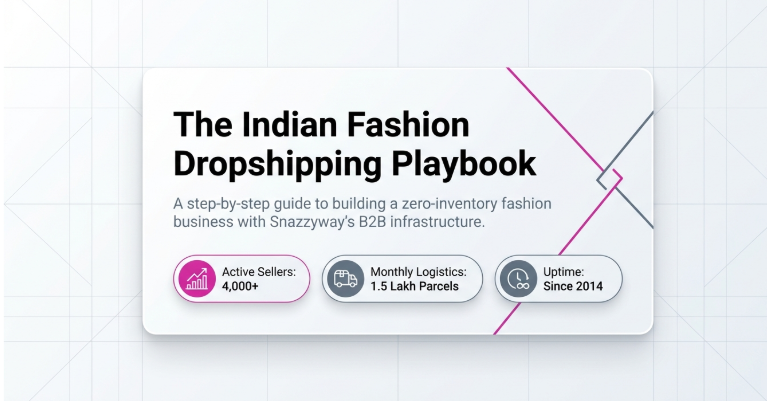
How Snazzyway Works — A Complete Guide for New Dropshipping Sellers in India
Mar 30, 2026
How Snazzyway Has Supported Indian Fashion Sellers for 12 Plus Years
Mar 30, 2026
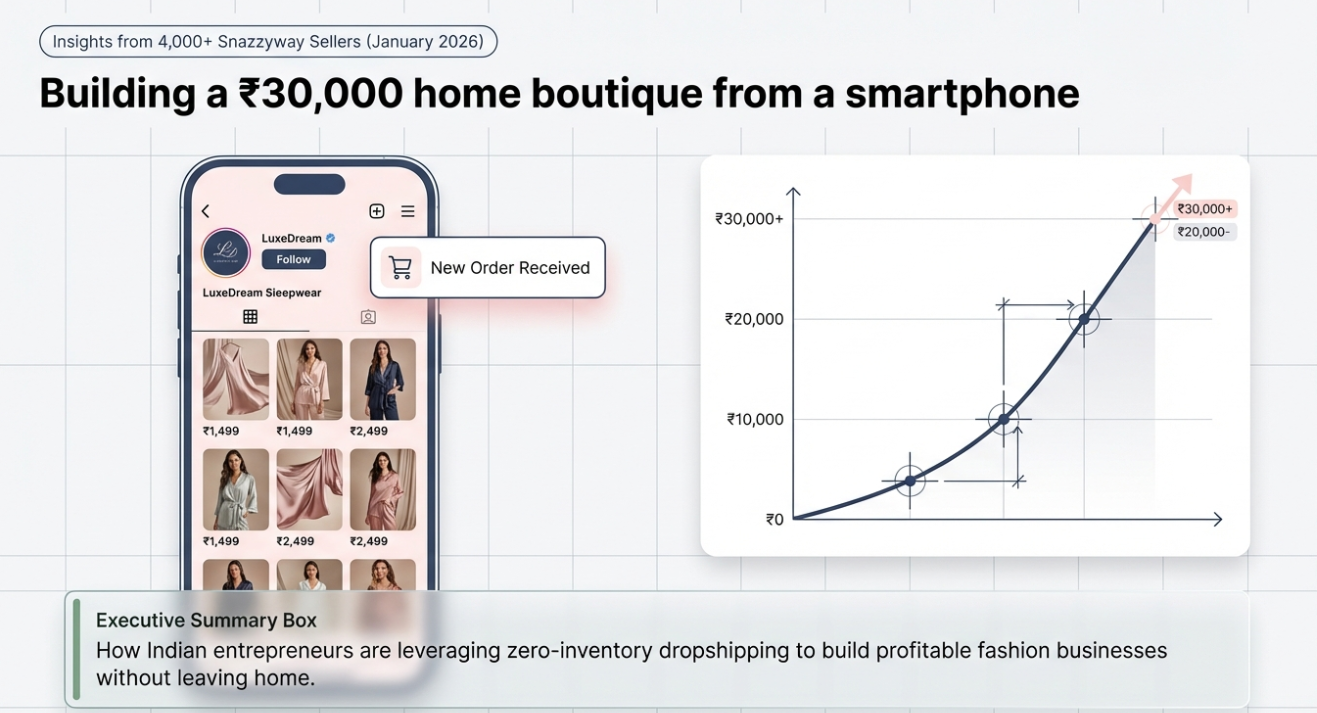
How Indian Housewives Are Earning ₹30,000 a Month Selling Online From Home
Mar 30, 2026